
Tonsillectomy–with or without adenoidectomy–remains one of the most commonly performed surgical procedures in the United States, both in children and increasingly in adults. If you or your child has been dealing with recurrent strep throat, chronic tonsillitis, or sleep-disordered breathing such as obstructive sleep apnea, and your physician has recommended surgery, you are likely in the stage of comparing options and costs.
This article explains what tonsil and adenoid removal involves, breaks down what Indiana patients typically pay at hospitals versus ambulatory surgery centers, and demonstrates how WellBridge Surgical’s transparent bundled pricing model can substantially reduce that cost–sometimes to zero for qualifying employees.
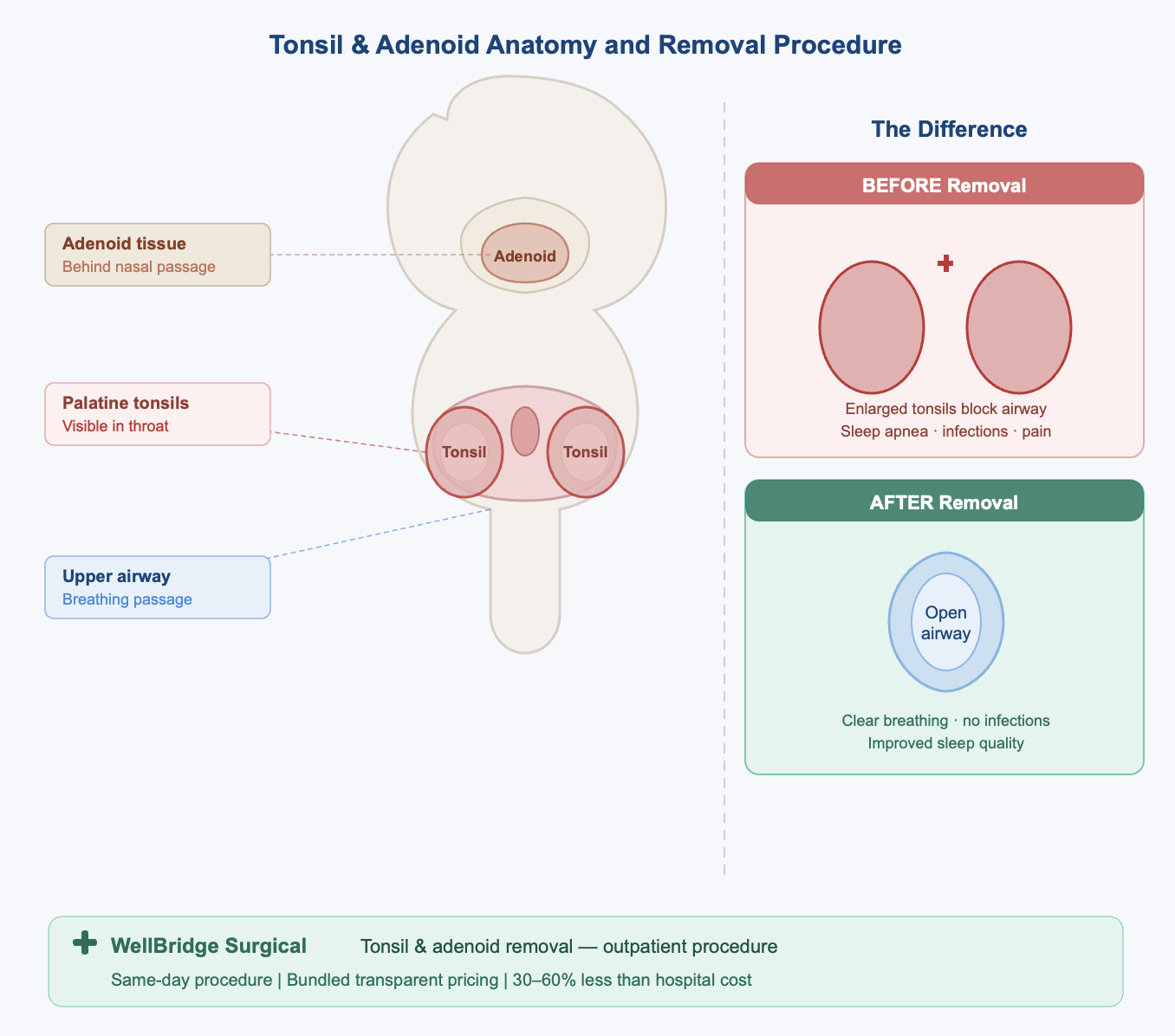
Throat and nasal anatomy showing palatine tonsils and adenoid tissue, before and after surgical removal
When Is Tonsil and Adenoid Removal Recommended?
Tonsils and adenoids are lymphoid tissue that play a role in early childhood immune development. For many people, however, they become a persistent source of problems rather than protection. The most common reasons physicians recommend removal include:
Recurrent tonsillitis: Typically defined as seven or more episodes in one year, five or more per year for two consecutive years, or three or more per year for three years. Frequent infections mean repeated antibiotics, missed school or work, and ongoing discomfort.
Chronic tonsillitis: Persistent sore throat, bad breath, and tonsillar stones (tonsilloliths) that do not resolve between acute episodes.
Obstructive sleep apnea: Enlarged tonsils and adenoids are a primary cause of sleep apnea in children, and a significant contributing factor in some adults. Symptoms include loud snoring, witnessed breathing pauses during sleep, restless sleep, daytime fatigue, and behavioral issues in children related to poor sleep quality.
Peritonsillar abscess: A pocket of infection adjacent to a tonsil. After a second episode, most surgeons recommend tonsillectomy.
Adenoid hypertrophy: Enlarged adenoids can independently cause nasal obstruction, chronic mouth breathing, ear infections and fluid, and eustachian tube dysfunction. Adenoidectomy is often performed alongside ear tube placement in children.
What the Procedure Involves
Tonsillectomy and adenoidectomy are performed under general anesthesia and typically take 30 to 45 minutes. The surgeon accesses the throat through the open mouth–there are no external incisions. Tonsils are removed from their tissue bed using one of several techniques, including electrocautery, ultrasonic technology, or powered instrumentation. The choice of technique affects operative time and post-operative bleeding risk.
In children, the procedure is almost exclusively outpatient, with discharge home within two to three hours of surgery. Adults, and children with specific risk factors such as severe sleep apnea, may require an overnight observation period in some cases–your surgeon will advise you based on your specific situation.
WellBridge Surgical performs tonsillectomies and adenoidectomies on appropriate outpatient candidates, with a surgical team experienced in these procedures and a recovery environment designed specifically for same-day surgical patients.
What Does Tonsil and Adenoid Removal Cost in Indiana?
Indiana hospital pricing for tonsillectomy and adenoidectomy can surprise families and adult patients alike. As with many surgical procedures, the cost at a hospital includes layers of institutional overhead that ambulatory surgery centers do not carry:
| Procedure Component | Indiana Hospital | Typical ASC | WellBridge Surgical |
| Facility fee | $9,000–$16,000 | $2,800–$5,500 | $2,200–$4,000 |
| Surgeon fee | $1,800–$3,200 | $1,400–$2,600 | Included |
| Anesthesia | $900–$1,800 | $700–$1,300 | Included |
| Pre-op labs / imaging | $300–$700 | $150–$400 | Included |
| Typical total cost | $12,000–$21,700 | $5,050–$9,800 | $4,000–$6,200 |
| Zero-tier employee cost | Up to full deductible | Varies | $0 |
Approximate costs based on Indiana market data. Hospital ranges reflect commercial insurance rates before patient cost-sharing. WellBridge pricing is all-inclusive and fixed.
Recent recommendations from The Centers for Medicare and Medicaid (CMS) to open a vast number of procedures to ambulatory surgery centers (ACS), have supported and provided further clarity with respect to the dependability, the improved recovery time & comfort, and the cost-savings associated with ambulatory care vs. hospitalization.
A critical point for families navigating this decision: hospital billing for a procedure like tonsillectomy typically involves multiple separate bills–the hospital facility fee, the surgeon’s professional fee, the anesthesiologist’s fee, and potentially separate charges for pathology (if tonsil tissue is sent for analysis) and pre-operative lab work. Each of these may come from a different entity on a different timeline.
At WellBridge Surgical, the bundled price is exactly that–bundled. One price, stated clearly in advance, covering the facility, the surgeon, anesthesia, and standard pre-operative requirements. Nothing arrives in the mailbox weeks later.
The Importance of Price Certainty When the Patient Is a Child
For parents, the financial uncertainty of hospital surgical billing adds stress to an already anxious situation. Knowing in advance exactly what a procedure will cost allows families to plan–whether that means preparing an HSA or FSA withdrawal, confirming insurance coordination, or simply understanding the financial commitment before the day of surgery rather than after.
WellBridge’s pricing model is particularly well-suited to family healthcare planning. When the out-of-pocket cost is known and manageable before the procedure is scheduled, the decision to move forward becomes less fraught and more straightforward.
Recovery After Tonsillectomy and Adenoidectomy
Recovery for children and adults differs meaningfully, and setting appropriate expectations is important.
Children: Most children experience a recovery period of seven to ten days. Pain is typically managed with scheduled acetaminophen and ibuprofen alternated on a regular schedule–staying ahead of pain rather than treating it after it escalates. Soft, cool foods are recommended (ice cream, yogurt, smoothies, mashed potatoes). Children often have noticeably better sleep and breathing within the first few weeks, sometimes dramatically so if sleep apnea was the primary indication.
Adults: Adult recovery tends to be more challenging and longer than pediatric recovery. Expect 10 to 14 days of significant throat pain, with the most difficult period typically occurring around days five through eight when the post-operative eschar (healing tissue) begins to shed. Staying hydrated is essential and is the single most important thing patients can do to support recovery. Adults should plan for one to two weeks away from work, depending on their occupation.
Post-operative bleeding is the primary concern after tonsillectomy and occurs most commonly between days five and ten. Your surgeon will provide specific instructions about what to watch for and when to seek immediate care. Most patients complete recovery uneventfully.
Zero-Cost Options for Qualifying Employees and Their Families
WellBridge Surgical has zero-tier pricing agreements in place with approximately 90 self-funded Indiana employers. Under these arrangements, employees and their covered dependents who choose WellBridge for eligible procedures–including tonsillectomy and adenoidectomy–pay nothing out of pocket. The deductible is waived by the employer plan because the total claim cost at WellBridge is low enough that the employer still saves money compared to the hospital alternative, even after covering the patient’s cost-sharing.
For a family with a child who needs tonsil removal, this benefit can represent savings of $5,000 to $15,000 or more compared to a hospital setting. WellBridge encourages patients to confirm their coverage status before scheduling and to contact the team with any questions about how their plan works with WellBridge pricing.
For patients whose employers are not yet WellBridge partners, the transparent bundled pricing is still typically 40 to 60 percent less than what a hospital charges. Surgical financing is also available for those who wish to manage the cost over time.
Healthcare can often feel intimidating and confusing concerning both pricing and treatment options. WellBridge Surgical remains committed to providing high-quality surgical services directly to patients with cost certainty, providing the peace of mind to proactively deal with preventative and corrective healthcare issues.
Visit our website at www.wellbridgesurgical.com to learn more about procedures and pricing, or call us at 317.480.4200.